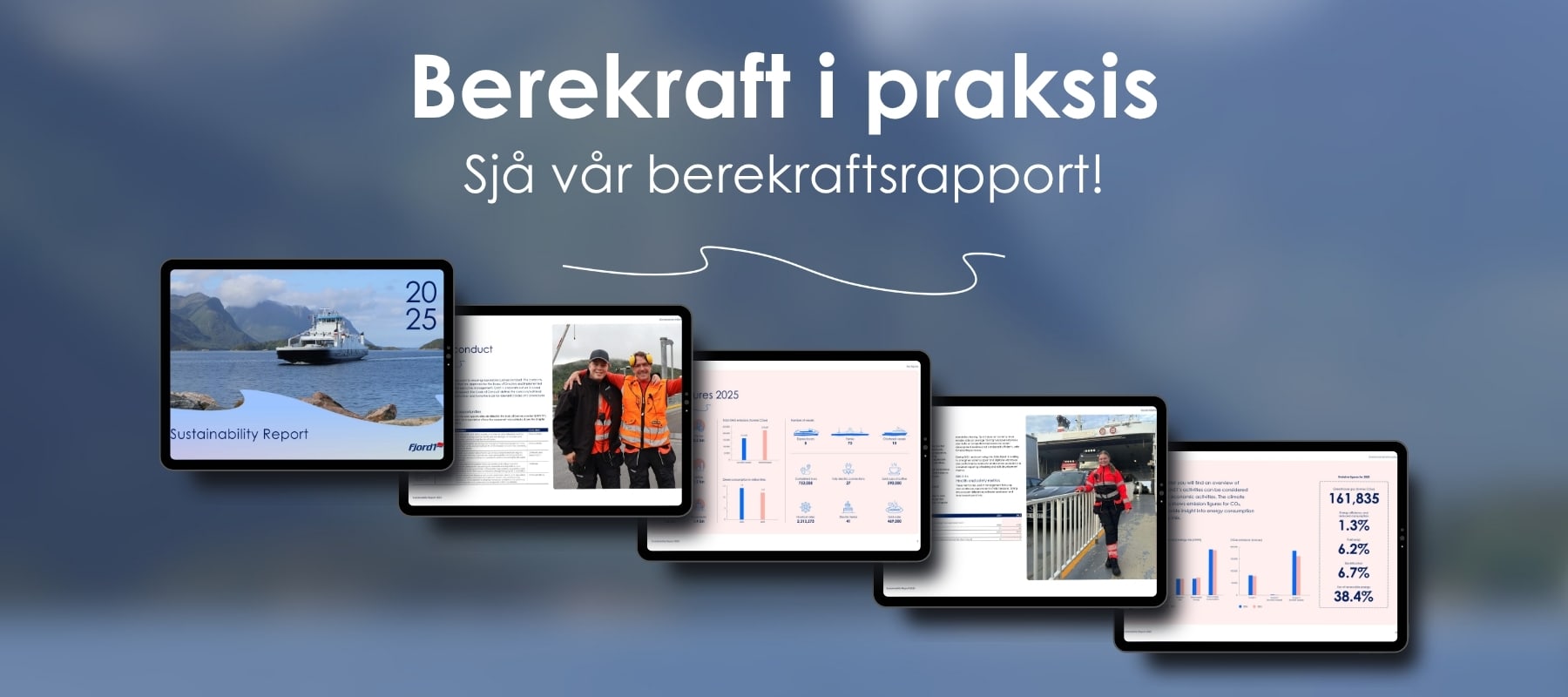
The report has been prepared by Fjord1, with assistance from Sopra Steria. In this article, the consulting firm shares its reflections on our sustainability efforts.
From an external perspective, consultant Marie Hoff Dyngeland has gained broad insight into the level of ambition, practices, and culture;
- The most distinctive feature of Fjord1’s sustainability work is that it is largely operationally anchored. It is about concrete choices in technology, operations, and procurement. Sustainability appears as part of the core business, not as a side project, says Marie.
Ambitions beyond minimum requirements
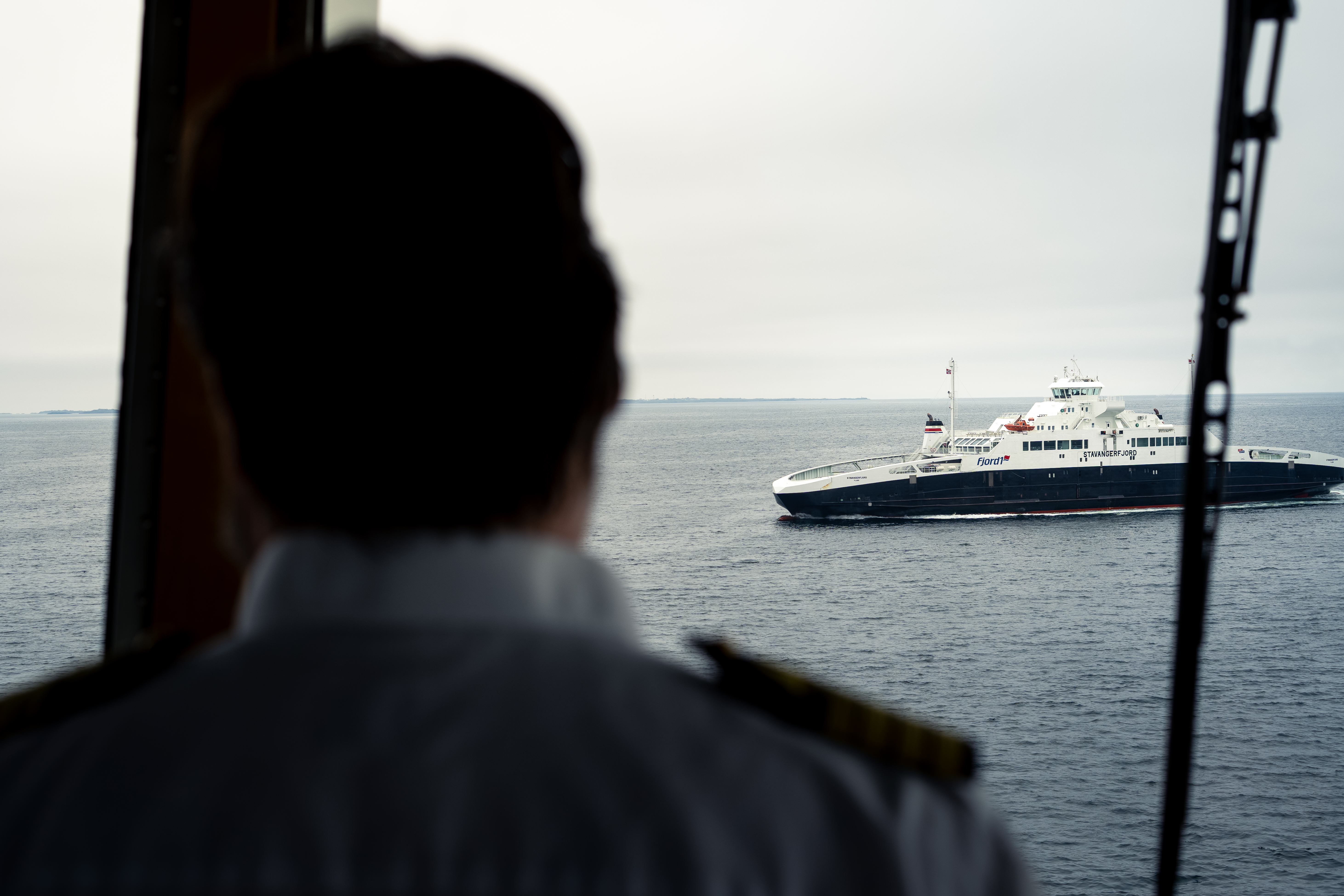
Ferry operations are a sector with extensive requirements related to climate, environment, and reporting. Nevertheless, the overall impression is clear: Fjord1 sets its ambitions higher than what regulations alone require.
- The level of ambition is clearly above the minimum requirements in the industry. Fjord1 takes responsibility beyond regulatory demands, particularly when it comes to emission reductions and the use of new technology, Marie explains.
This is also reflected in the reporting. Fjord1 chooses to report more broadly and in greater depth than what is currently required—precisely to gain better oversight, improve management, and be transparent about both progress and challenges.
This also aligns with how requirements are actually experienced in day-to-day operations. According to Energy and Environmental Manager Jan Hovden Eide, the most important drivers come through environmental requirements in ferry contracts.
- In practice, delivering environmentally friendly transport is part of the tender requirements. Most contracts being put out today are close to 100 percent electric, he says.
Requirements vary somewhat from contract to contract, and access to infrastructure can be a challenge in some areas, particularly in parts of Northern Norway. Still, the direction is clear.
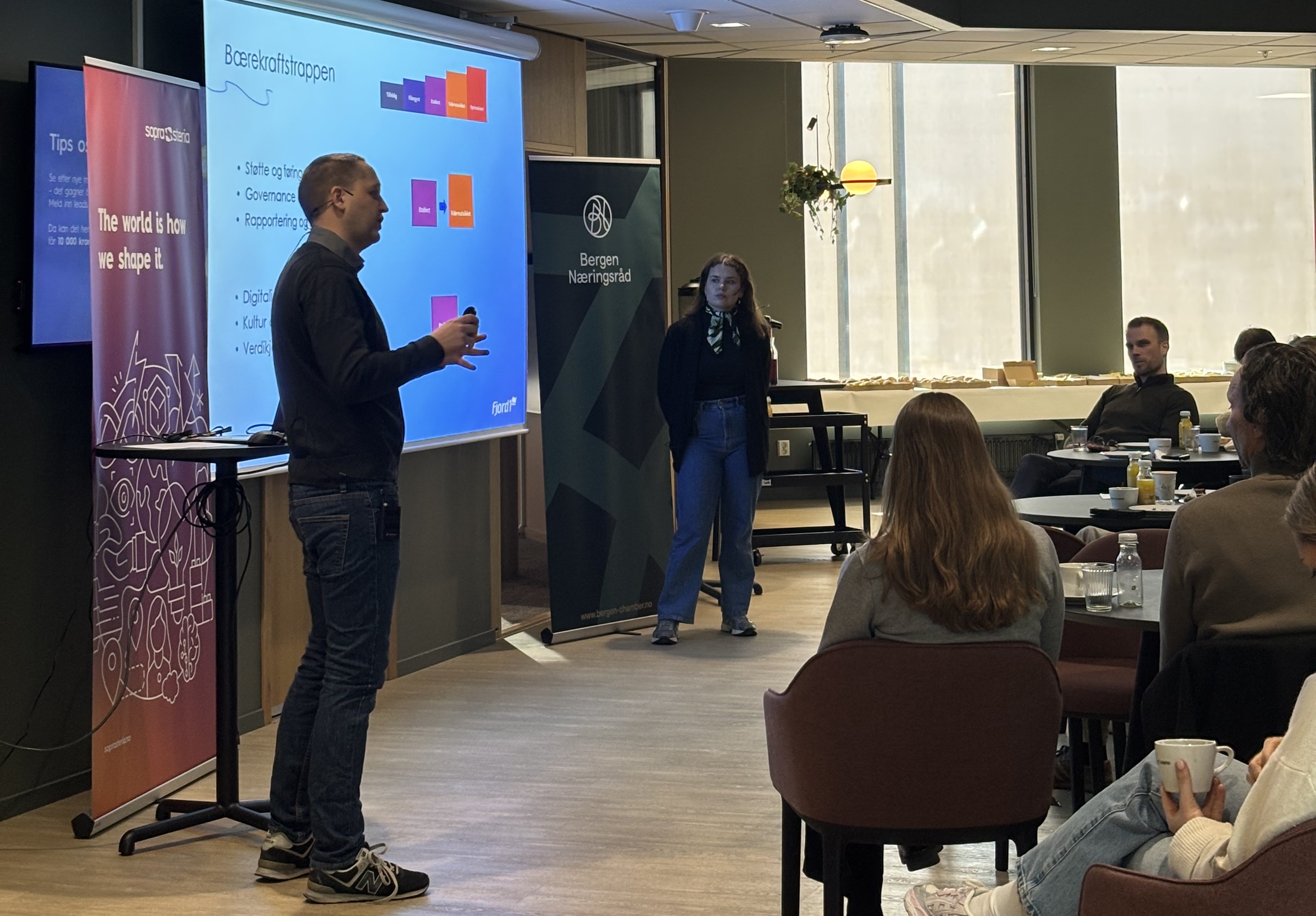
- These are the frameworks we operate within, and which we have adapted to over time, says Jan (picture under).
Investments that demand more – but deliver impact
One of the clearest examples of Fjord1’s high level of ambition can be found in its work on climate and the environment. Since 2018, the company has made significant investments in hybrid-electric ferries.
- For us, it is absolutely essential that the ferries are safe and reliable. We are an extension of the road, and the ferries must run. Safety and operations always come first, but environmental considerations are a very important part of the whole, says Jan.
Today, Fjord1 has around 40 hybrid-electric ferries in operation, and has also launched its own high-speed passenger vessels.
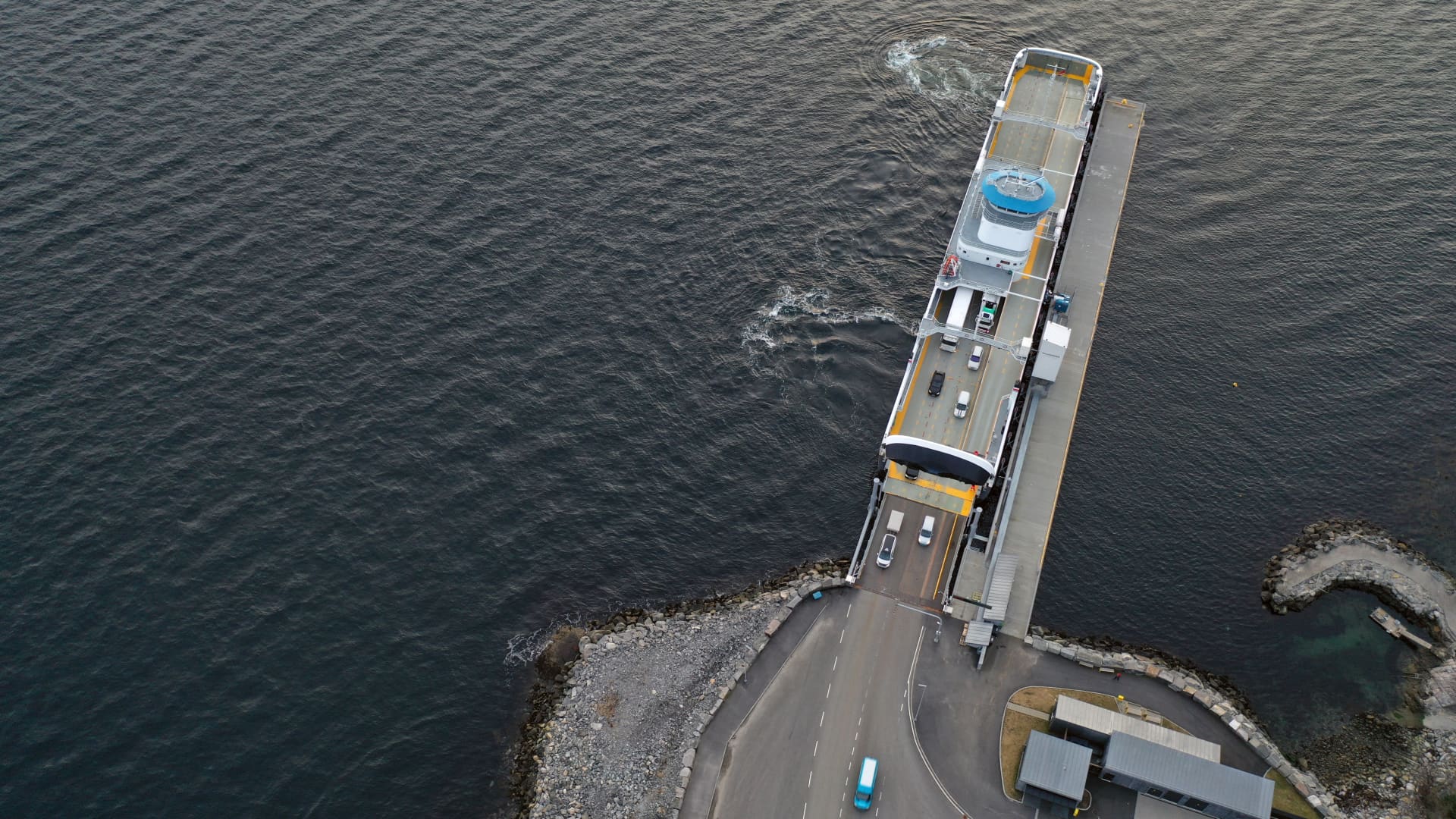
- Low-emission ferries and high-speed vessels are the solution for reducing emissions in our part of the transport sector. That is where the greatest impact lies, Jan explains.
Marie points out that these choices often involve more complex solutions, both technically and financially in the short term.
- Even so, Fjord1 has prioritised them because they deliver clear climate benefits and long-term value. It shows a willingness to make investments that may not necessarily pay off immediately, but that are the right choices over time, she says.

Sustainability in everyday operations
One of the key findings from the report is that sustainability in Fjord1 is not confined to high-level strategies, but is embedded in day-to-day work.
- We see that sustainability is integrated into routines, priorities, and the way employees contribute. At Fjord1, it is a continuous improvement process, closely linked to safety, efficiency, and service quality, says Marie.
This perspective is also confirmed from within the organisation. Lotte Becher, a trainee in HSE and sustainability, experiences sustainability as a natural part of everyday work in the company.
- I feel that sustainability is something we relate to on a daily basis. There is a focus on both environmental and social aspects across the entire organisation, and there are clear ambitions that we should take responsibility, she says.
Through her work, including on climate transition plans, she has gained closer insight into how sustainability is followed up in practice.
- It is not something that belongs to just one department. It is an ongoing effort that runs across the entire organisation, as I see it, she says.

The social dimension of sustainability
Throughout the reporting process, many people across the organisation have contributed. Sustainability is not only about climate and technology—the social dimension is also central to Fjord1’s work.
- For us, it is about facilitating a good work–life balance for our employees, and actively using employee surveys to implement concrete measures, Lotte explains.
She points, among other things, to HR-supported follow-up schemes where employees can receive support related to health, exercise, and mental well-being.
- Such initiatives are part of the responsibility we take as an employer and an important part of the sustainability concept. Employees also experience this very positively, she says.

A sense of ownership embedded in the organisation
Many people in the organisation have contributed throughout the reporting process. For Marie, this has been one of the most impressive aspects.
- There is a clear sense of ownership within the organisation. Knowledge is not concentrated in one place but is broadly anchored. This means that the report largely reflects actual practice, not just what one wishes to communicate.
At the same time, she points out that much of this work takes place out of the spotlight.
- The ongoing improvement work in operations and the expertise of employees are often under-communicated, even though they have a significant real impact.
Jan recognises this description of broad ownership of sustainability efforts and notes that it is closely linked to how critical the operations are.
- We are part of the infrastructure, so everyone working here is used to thinking in terms of responsibility and continuous improvement. This makes sustainability something that naturally belongs in the organisation, not something extra, he says.
On the path towards a clear role in the industry
Collecting, structuring, and documenting sustainability efforts has been demanding.
- A complex organisation with extensive operational activity places high demands on data collection, roles, and shared terminology. Fjord1 is well underway in building structures that will make this work easier and more precise going forward, says Marie.
The report thus becomes not only a summary of the current status, but also a tool for further development.
Looking a few years ahead, Marie believes that Fjord1 has the potential to take on a clear role—not only as a ferry operator, but also as a knowledge leader within the industry.
- I believe Fjord1 will continue to be a driving force for zero-emission ferry operations and further develop how sustainability is integrated into operations and tender processes. Over time, they may also play an important role in sharing experience and solutions, she concludes.